Choosing the right commercial carpet tiles for your office is one of the most impactful decisions you can make for your workspace. The floor covers every square metre of your office — it affects acoustics, comfort, aesthetics, maintenance costs, and even employee productivity. Get it right, and your floor becomes a strategic asset. Get it wrong, and you'll be living with the consequences for years.
This guide walks you through every factor you need to consider when selecting commercial carpet tiles for an office environment, drawing on our 30+ years of experience installing office floors across Melbourne and Victoria.
Step 1: Understand Your Traffic Patterns
Not all areas of your office experience the same wear. Before selecting a carpet tile, map your office into traffic zones:
- Heavy Traffic — Reception, main corridors, breakout areas, and paths between desks and meeting rooms. These areas need the most durable tiles with the highest-rated wear performance.
- Medium Traffic — Open-plan workstation areas, meeting rooms, and communal spaces. Most of your floor area falls here.
- Light Traffic — Executive offices, storage rooms, and private meeting pods. These areas can use lighter-duty products if budget is a consideration.
Step 2: Choose the Right Fibre Type
- Solution-Dyed Nylon (Recommended for Offices) — The gold standard for commercial carpet tiles. The colour is embedded into the fibre during manufacturing, making it permanently resistant to fading from sunlight, cleaning chemicals, and bleach. Nylon is also the most resilient fibre, bouncing back from compression caused by furniture legs and foot traffic. Expect to pay $40-$70/m² installed.
- Polypropylene (Budget Option) — A more affordable fibre that performs well in light-to-medium traffic areas. Less resilient than nylon over time and can show flattening in heavy-traffic zones. A good choice for budget-conscious projects or temporary fit-outs. Expect to pay $25-$40/m² installed.
- Wool Blend (Premium Applications) — Natural, luxurious feel with excellent acoustic and thermal properties. Best suited to executive suites, boardrooms, and premium reception areas where comfort and aesthetics justify the higher investment.
Step 3: Consider Backing Type
The backing is the structural layer beneath the carpet surface that affects how the tile performs, sounds, and lasts.
- PVC Backing — The most common commercial option. Dimensionally stable, moisture-resistant, and works on most subfloors. Suitable for the majority of office installations.
- Cushion Back — Adds underfoot comfort and superior acoustic performance. Ideal for offices where noise reduction and staff comfort are priorities.
- Felt Back — A more environmentally friendly option that can be recycled more easily. Growing in popularity for organisations pursuing green building certifications.
Step 4: Design and Colour Selection
- Brand Integration — Use your corporate brand colours strategically. Feature brand colours in reception and common areas, and use complementary neutrals in workstation zones.
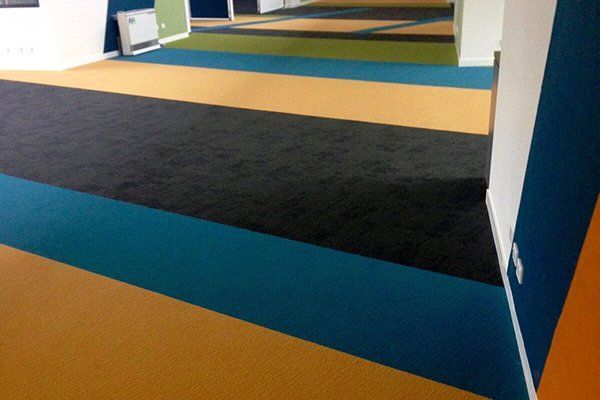
- Zoning — Different colours or patterns can define different areas without walls: collaborative zones, quiet focus areas, circulation paths, and social spaces.
- Practical Colours — Mid-tone colours (charcoals, warm greys, blues, greens) are the most forgiving in commercial settings. Very light colours show every mark; very dark colours show lint and dust.
- Pattern — Textured and patterned tiles hide wear and soiling far better than solid, flat colours. Multi-tonal designs are especially forgiving in high-traffic areas.
Step 5: Budget and Total Cost of Ownership
The purchase price per square metre is only part of the equation. Consider total cost of ownership over the expected floor life:
- Initial Cost: Product + installation + subfloor preparation.
- Maintenance Cost: Regular vacuuming + periodic deep cleaning + spot cleaning.
- Replacement Cost: Individual tiles vs entire floors. Carpet tiles allow spot replacement — saving significantly over broadloom carpet or hard flooring.
- Downtime Cost: Lost productivity during installation. After-hours installation eliminates this cost entirely.
A slightly higher upfront investment in quality tiles often delivers significantly lower total cost over 10-15 years.
Step 6: Get Expert Advice
Every office is different. Subfloor conditions, building regulations, acoustic requirements, wheelchair access, and aesthetic preferences all influence the best choice. That's why Commercial Floors offers free on-site consultations where our experts assess your specific space and recommend the optimal solution for your needs and budget.
Call us on 0419 810 810 or request a free consultation.
Frequently Asked Questions
What is the best carpet tile for offices?
Solution-dyed nylon carpet tiles with PVC or cushion backing are the best choice for most office environments. They offer superior durability, permanent colour fastness, excellent acoustic performance, and easy maintenance. We recommend multi-tonal or patterned designs in mid-tone colours for the best balance of aesthetics and practicality.
How much do office carpet tiles cost per square metre?
Office carpet tiles typically cost $25 to $70 per square metre installed in Melbourne. Budget polypropylene tiles start from $25/m², while premium solution-dyed nylon tiles range from $40 to $70/m². The exact cost depends on the product, floor area, and subfloor conditions.
How long do office carpet tiles last?
Quality office carpet tiles last 10 to 15 years with proper maintenance. Individual high-traffic tiles can be replaced as needed without disturbing the rest of the floor, effectively extending the overall floor life.
Get a Free Quote Today
Call us on 0419 810 810 or request a free measure and quote. We come to you — anywhere in Melbourne and regional Victoria.